


Morning Meeting Activities That Build Growth Mindset and classroom culture from Day One


Why Morning Meeting Activities Matter During the First Month of School
It was only the second week of school, and I could already hear two very different voices in my classroom.
One student looked at a challenging task and quietly said, "I can't do this."
Another took a deep breath, smiled, and said, "I'll keep trying."
They were learning the same lesson, sitting in the same classroom, yet they approached the challenge in completely different ways.
That moment reminded me that the first month of school isn't just about teaching classroom routines. It's about helping students develop the mindset they'll carry with them all year long.
As teachers, we spend those first few weeks establishing expectations, building relationships, and creating a classroom community. But what if our morning meeting activities could do even more? What if they could become a daily opportunity to teach resilience, empathy, problem-solving, and the power of a growth mindset?
How Morning Meeting Activities Can Shape Classroom Culture
Children don't automatically know how to respond when they make a mistake, feel left out, or face something difficult. These are skills that can be taught and one of the most effective ways to teach them is through storytelling and meaningful discussion.
Stories help children see themselves in everyday situations. They make abstract ideas like perseverance, kindness, responsibility, and positive thinking feel real and relatable. When paired with thoughtful discussion prompts, morning meetings become much more than a daily routine, they become a foundation for a positive classroom culture.
One of the greatest gifts we can give young learners is the belief that they are capable of learning, growing, and improving. That's why I believe kindergarten is the perfect place to begin teaching growth mindset.
During the first weeks of school, children are learning so much more than classroom routines. They're learning how to make friends, solve problems, ask for help, and respond when something feels difficult. These everyday moments become the building blocks of confidence and resilience.

That's exactly what inspired me to write Think Big and later create companion Morning Meeting Activities that help teachers introduce classroom routines, social-emotional learning, and growth mindset in just 15 minutes a day.
Children remember stories long after they forget a lesson.

Think Big introduces two memorable characters Mr. Big and Mr. Small who represent growth mindset and fixed mindset thinking. As students listen, they begin to recognize these two inner voices in themselves. Suddenly, abstract concepts like perseverance, making mistakes, and trying again become easy to understand.
That's what makes Think Big an ideal read-aloud for the first day or first week of school.
But the learning doesn't end when the story is over.
Each day, you can build on the book with short morning meeting activities that invite students to discuss real-life classroom situations. Through simple scenario cards, students practice asking questions like:
What would Mr. Small think?
What would Mr. Big do instead?
What choice would help our classroom grow?
In just 15 minutes a day, these conversations help students learn classroom routines, strengthen social-emotional skills, and create a shared language that supports a positive classroom culture all year long.
Before Teaching Growth Mindset, Start With Your Own
Before we can help students develop a growth mindset, it is important to reflect on our own mindset as educators. Teaching is filled with challenges, unexpected moments, and situations that require flexibility and patience. The way we respond to those challenges becomes a powerful model for our students.
A teacher who embraces mistakes as learning opportunities, stays open to trying new strategies, and believes students can grow creates an environment where students feel safe to do the same.
If you are interested in exploring how developing your own growth mindset can positively impact your teaching experience, this article from Truth for Teachers is a wonderful resource: "How to Cultivate a Growth Mindset to Enjoy Teaching More."
Morning Meeting Activities: A Simple Plan to Build a Growth Mindset Classroom
One of the biggest mistakes we can make is assuming children already understand what a growth mindset is. It's easy to hand students a journal prompt and ask them to write, but for many young learners especially in Kindergarten through Grade 3, they first need to understand the difference between growth mindset and fixed mindset.
By taking just a few days to explicitly teach these concepts, your daily morning meeting activities become much more meaningful because students begin using a common language that they can apply throughout the school year.
Step 1: Start with a Growth Mindset Read-Aloud
The best way to introduce growth mindset is through storytelling.
Picture books help children connect with characters, recognize emotions, and understand abstract ideas in a way that feels natural and memorable. If possible, choose a story that specifically teaches the difference between growth mindset and fixed mindset, rather than simply encouraging perseverance.

Some of my favorite books for introducing this concept are:
Bubble Gum Brain
Fantastic Elastic Brain
Think Big (which introduces Mr. Big and Mr. Small to help children easily recognize growth mindset and fixed mindset thinking)
As you read, pause throughout the story and ask questions such as:
What is this character thinking right now?
Is this a growth mindset or a fixed mindset?
What could the character do differently?
Have you ever felt this way?
What would you say to encourage your friend?
Rather than simply reading the story, invite students into the conversation. These discussions help children begin recognizing these thinking patterns in their own lives.
To make this even easier, my Morning Meeting Activities resource includes a complete read-aloud lesson plan with discussion questions to guide these conversations.
I recommend spending the first 2–3 days simply introducing these ideas before moving on to daily mindset prompts.
Step 2: Practice Identifying Growth and Fixed Mindset Thinking
Once students understand the two types of thinking, give them opportunities to practice identifying them.

This can be done with simple statements like:
"I can't do this."
"Mistakes help me learn."
"Math is too hard for me."
"I can improve if I keep practicing."
"I'm not good at drawing."
"I'll try a different strategy."
Ask students:
Is this something Mr. Big would say or Mr. Small would say?
You'll quickly discover that children begin correcting themselves and even encouraging one another using this shared language.
This is exactly why I created my Growth Mindset Flash Cards. they provide dozens of engaging prompts that help reinforce the difference between growth mindset and fixed mindset in a fun, interactive way.
Step 3: Use Morning Meeting Activities to Connect Growth Mindset to Everyday Classroom Life
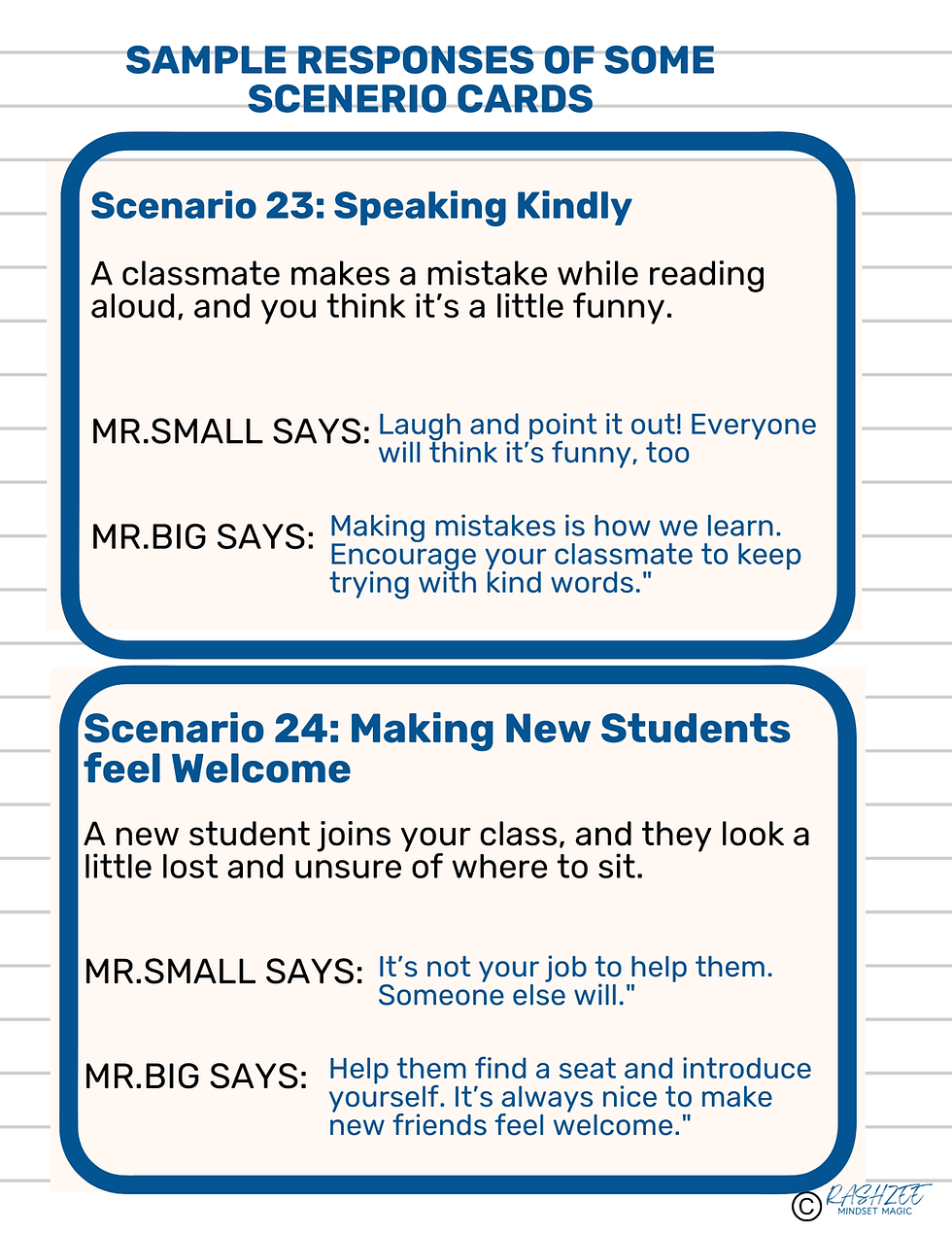
Once students understand the concept, it's time to connect it to real classroom situations.
This is where daily morning meeting activities become incredibly powerful.
Each morning, choose one scenario card related to classroom routines, friendships, responsibility, kindness, or problem-solving.
For example:
Your friend is sitting alone at recess. What would Mr. Big do?
You accidentally spill your supplies during class. What could you say to yourself?
You don't understand today's lesson the first time. What would a growth mindset sound like?
Someone is using the classroom materials you wanted. How can you respond respectfully?
These everyday situations help students practice making positive choices before they encounter them in real life.
Step 4: Journal, Discuss, and Reflect Together
Children's minds are fresh in the morning, making it the perfect time to begin the day with a meaningful conversation.
Display one prompt during your Morning Meeting and invite students to write or draw their responses in a journal.
The real learning happens after the writing.
Every child will have a different perspective, creating wonderful opportunities for discussion. Invite students to share their thinking, compare ideas, and respectfully explain why they made certain choices.
These conversations often take just 10–15 minutes, but they gradually build self-awareness, empathy, confidence, and resilience.
Over time, students begin asking themselves questions like:
"What would Mr. Big do?"
Instead of simply following classroom rules, they begin understanding why those choices matter. That's when a true growth mindset culture starts to take root, not through one lesson, but through small, intentional conversations that happen every single day.
Hi, I’m Rashda, teacher, speaker, author, and big believer in helping kids think big! When I’m not in the classroom, you’ll find me writing, baking, or chasing growth mindset moments with my three kids.


Comments